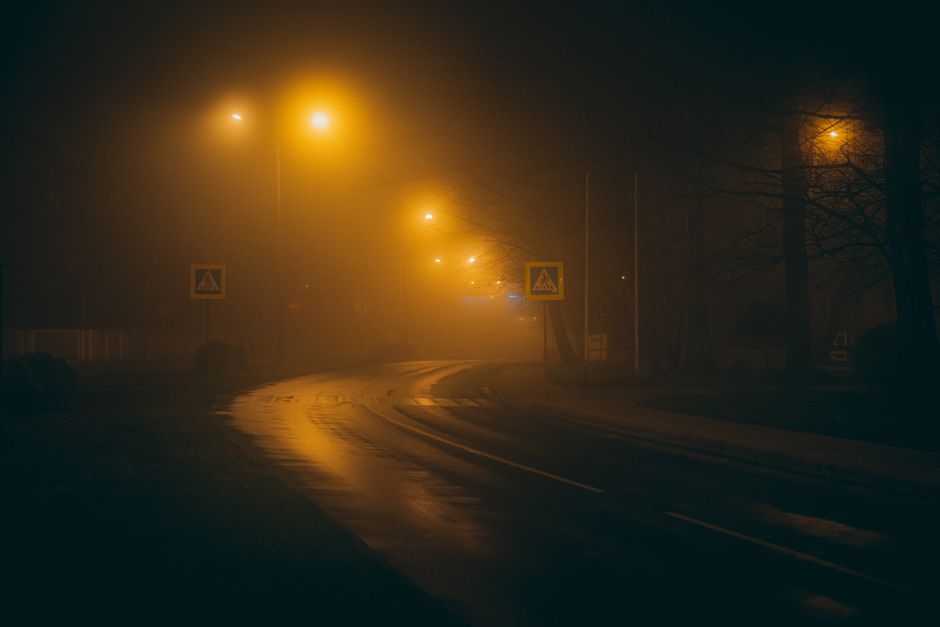
Rock Paper Shotgun put the thing plainly in its Townfall review: Silent Hill has broken containment. It isn’t a fictional town in Maine anymore, it’s a transferable oral history mechanism, offered out to developers worldwide as a way of investigating local culture. RPS is two minds about whether that licensing outreach, which started with Silent Hill f, is more inspired than vampiric.
I think the vampirism worry has the transaction backwards.
Who is draining whom
Eurogamer’s reviewer watched the credits roll and found it hard to believe this is the same series that, until a few years ago, had been neglected into near-irrelevance. That’s the baseline. Konami spent the better part of a decade doing nothing with Silent Hill except pachinko and silence. The studios taking the invitation aren’t being bled by a healthy IP, they’re performing a transfusion into a depleted one. IGN’s framing is almost literal about it: like the intravenous needle permanently jutting out of its hero’s wrist, Townfall gives the series a shot in the arm.
The thing being licensed is not a town. It’s a permission structure. Fog, a wounded protagonist, a place that reorganizes itself around guilt, and beyond that, do whatever you want with your own regional horror. That’s a loose enough brief that f and Townfall come out as genuinely different games rather than two skins on the same corpse. Eurogamer calls Townfall part inversion, part subversion, part evolution, charting its own path. PC Gamer’s standfirst is just “There’s no place like home,” which is a joke about the setting and also about what the license actually gives you.
The seam every reviewer found
Now the bad news, which is remarkably consistent across five outlets. Polygon: genuinely scary, then really dull. RPS: often inspired, slightly lumbering. Polygon’s sharper line is that Townfall understands what sets this horror series apart but can’t quite replicate it.
That sag is structural, not incidental. A new team coming into an inherited world front-loads everything it has. The opening hours are where an outsider’s ideas hit hardest, because unfamiliarity is doing half the work. Sustaining dread for a full runtime needs systems, enemy design that stays legible under repetition, an economy of scarcity that keeps biting in hour six. Those are expensive, and a one-off licensed entry has the weakest possible incentive to build them. You get the swing. You rarely get the follow-through.
I’d still take this over another decade of nothing. A game that’s terrifying for three hours and merely competent for four is a better outcome than a franchise preserved in amber by a publisher with no ideas for it.
Two entries in, the model has produced f and Townfall, both reviewing as flawed and interesting rather than safe. The open question is how many invitations Konami has pushed under how many doors, and whether any of those teams solves the back half.