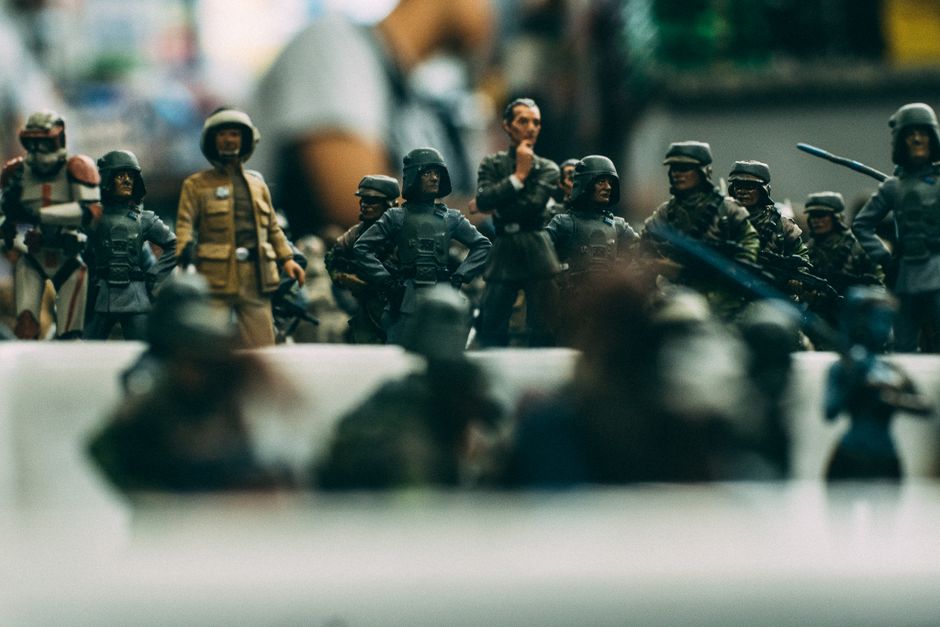
Creative Assembly has confirmed what a lot of Total War players suspected once the 40,000 announcement landed: there is no plan for Total War: Warhammer 40,001. The studio’s line is that “the true experience is the sandbox”, and the plan is to keep piling updates and DLC onto a single game rather than splitting the setting across a trilogy the way they did with the fantasy Warhammer games.
That’s a bigger departure than it sounds.
The trilogy was a workaround, not a design
The three fantasy Warhammer games worked because of Mortal Empires and then Immortal Empires, the combined campaign maps that stitched the games together if you owned all of them. It was clever. It was also awkward. New players faced a purchase matrix instead of a store page, and the studio spent years maintaining a technical bridge between three separate products just to deliver the thing everyone actually wanted, which was one enormous map with everything on it.
Starting at the sandbox and never fragmenting it is the correct call. It just moves all the risk to launch. A trilogy lets you course-correct: ship game one, learn, redesign systems in game two, rebuild again in game three. A perpetual sandbox has to get its foundations close to right on the first try, because you don’t get a clean-slate sequel to fix the campaign layer you regret. Every future faction has to slot into whatever framework ships on day one.
The galaxy problem
The studio’s own framing, that it’s “just such a huge galaxy to fill”, cuts both ways. 40K has more factions, more sub-factions and more successor chapters than any studio could ship at once, which is exactly why the DLC well never runs dry. It’s also why the scope is frightening. Fantasy Warhammer had a map with recognizable geography and borders. A galaxy is mostly empty space, and “fill it” is a design problem before it’s a content problem.
We still don’t have a release date, which makes all of this a statement of intent rather than something to evaluate. What’s worth watching is the shape of the campaign map when they finally show it. If it’s a fixed set of sectors, the sandbox promise is more limited than the word implies. If it’s genuinely extensible, they’ve built themselves room to add Tyranid splinter fleets and new Chaos legions for a decade.
What this actually costs players
The honest read on “no sequels” is that it changes the billing model, not the spending. Three boxed games plus DLC becomes one boxed game plus more DLC. Fantasy Warhammer’s Lord Packs and race packs already ran into the hundreds of dollars for completionists, and nothing about a single-SKU approach lowers that ceiling. What it does remove is the worst part: buying the same game again to keep your existing armies relevant.
Creative Assembly has been rebuilding trust since the Hyenas cancellation and the Pharaoh pricing reversal. Committing publicly to a game they’ll support instead of replace is a reasonable move for a studio in that position. The proof is in whether the updates keep landing three years after launch, and there’s no date on the calendar yet to start counting from.