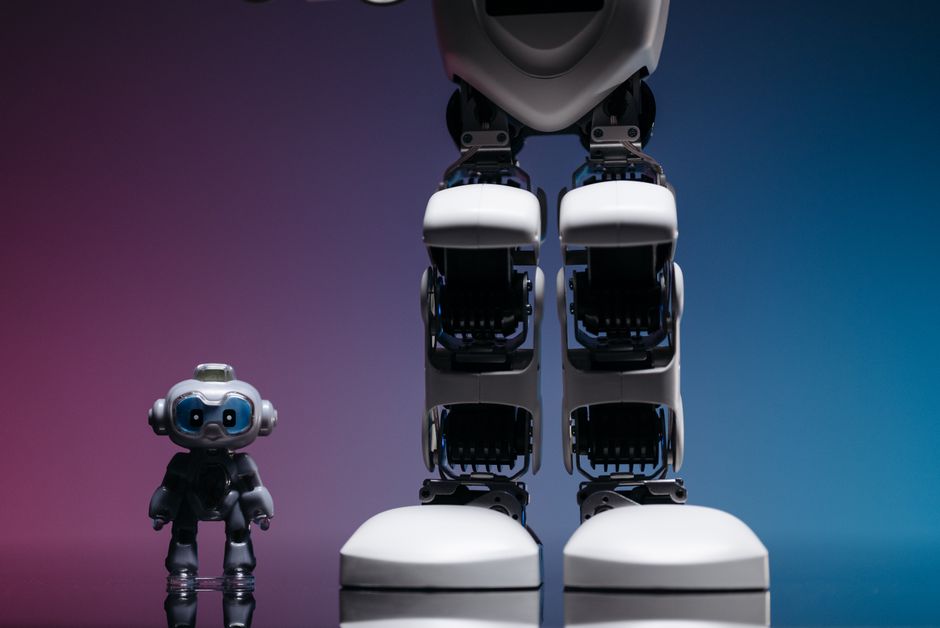
Pollen Robotics, the French outfit Hugging Face bought in 2025, has a second robot up for preorder. It’s called the Microduck: one eye, two legs, 25cm tall, $399, in cream, graphite, lavender, and sky blue. Shipping “before Christmas 2026.” Clem Delangue, Hugging Face’s CEO, is pitching it as “an open-source robot you can teach new tricks with reinforcement learning.”
The demo videos are charming. It rollerskates. Everybody covering this landed on some version of “adorable,” and they’re right, which is a problem for anyone trying to figure out what the thing is for.
The price is the argument
Strip away the duck and what you have is a bipedal platform with open software at consumer-toy money. That’s the interesting number. Bipedal locomotion is one of the genuinely hard problems in robotics, and until recently the entry fee for touching it was a research lab budget or a Unitree unit at several thousand dollars. Four hundred bucks puts a walking robot on the desk of any grad student, hobbyist, or bored engineer who wants to run policies on real hardware instead of in a simulator.
That’s a real contribution and it fits what Hugging Face already does. Their whole business is being the place where the models and datasets live. LeRobot, their robotics library, is the same play aimed at hardware. Sell enough cheap identical bipeds and you get something nobody else has: a large population of the same physical robot, which means training data and control policies that actually transfer between them. One person’s walking policy runs on everyone’s duck. That flywheel is worth more to Hugging Face than the margin on the hardware.
The gap between preorder and payoff
Here’s where I’d hold off. The Register notes it’s ready to play out of the box, and that’s the version most buyers will experience: a cute thing that walks, and then sits on a shelf. Teaching a robot new tricks with reinforcement learning is not a weekend. It’s reward shaping, sim-to-real transfer, a hardware platform that survives thousands of falls, and a community that has built enough shared tooling that you aren’t starting from a blank file. Pollen’s first robot, Reachy Mini, has been out long enough to test that thesis. The Microduck’s value depends almost entirely on whether that ecosystem showed up.
And the ship date is 16 months out. Preordering hardware from a company whose parent is primarily a software business, with a delivery window that far ahead, is a bet on execution nobody has evidence for yet. Robot preorders have a well-documented history of slipping.
If you want a walking robot to hack on, $399 is a fair price and the open-source commitment is real. If you want a robot that does something useful, this isn’t that, and Hugging Face isn’t claiming it is. The tell will be what the LeRobot hub looks like in a year: how many Microduck policies are up there, and whether any of them were written by someone who didn’t work at Pollen.