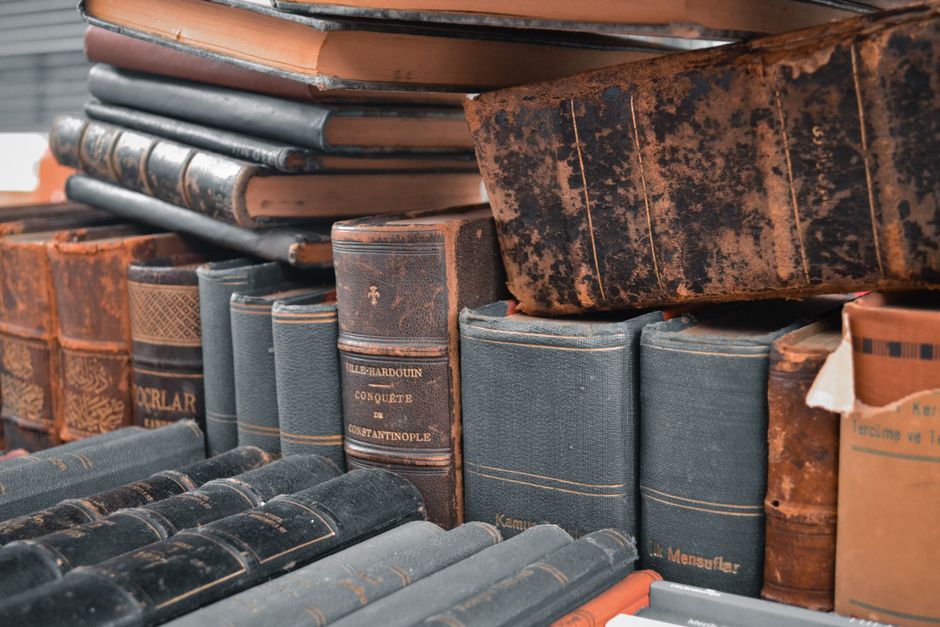
Book dealers have been telling this story to each other for a couple of years now. Someone shows up, wants a thousand volumes, doesn’t haggle, doesn’t care about condition, won’t say who they are. The money is good and the questions are unwelcome. Everyone assumed AI training. Nobody could prove where the pallets went.
404 Media put an AirTag in one and watched.
The shipment ended at an Amazon processing facility in Las Vegas where, per the report, destructive scanning is the whole operation: cut the spine off, run the pages through a feeder, discard the carcass. Not a side project. Not a pilot. That is what the building does.
The mundane part is the interesting part
Strip away the cloak-and-dagger and what’s left is a supply chain. Anthropic did the same thing, bought books, cut them apart, scanned them, and a judge found that training on lawfully purchased and destroyed copies sat within fair use. That ruling didn’t settle the copyright fight, but it did publish a recipe. Buy the physical object. Destroy it. You now own one legal digitization of it and the author gets nothing beyond the used-market price of a book they probably weren’t earning royalties on anyway.
So of course a second company followed the recipe. The surprising thing would have been if nobody did.
What the anonymity buys is not legal cover, since the buying itself appears to be lawful. It buys price. A dealer who knows Amazon is on the other end of the invoice prices accordingly. A dealer who thinks he’s clearing shelf space for a collector does not. The secrecy is a procurement tactic dressed up as a trade secret.
Rare books are a different argument
Most of what goes through a scanner like this is ordinary: paperbacks, textbooks, remainders, the sort of thing that exists in ten thousand identical copies. Destroying one costs the world nothing.
Rare books are not that. Scarcity is the point of them. A scanned page image preserves the text and loses the object, the binding, the marginalia, the printing variations that bibliographers actually study. If the buyers are genuinely indifferent to condition and rarity, and dealers say they are, then some irreplaceable copies are going into the feeder alongside the pulp. That’s the piece worth getting angry about, and it has nothing to do with copyright law.
The defense will be that the text survives. It does. So does a photograph of a burned building.
What happens next
Dealers now have a rough profile to work with: bulk order, price-insensitive, anonymous, freight to Nevada. Some will refuse. More will raise prices, which is the rational move and probably the only leverage the trade has. Expect the buying to route through more layers of intermediary in response.
Amazon hasn’t explained the Vegas facility. The books that went through it in the meantime are not coming back.