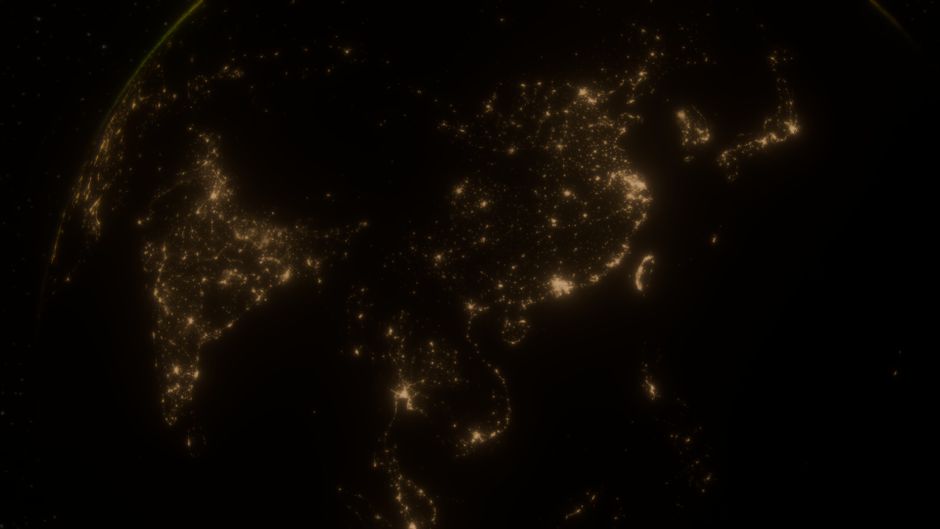
Google launched an AI editing feature in Google Earth on Thursday that let users reshape satellite, aerial, and 3D imagery with a text prompt. By Friday it was gone. According to reporting from The Verge, the rollback followed demonstrations by Digital Digging’s Henk van Ess, who used the tool to generate images depicting refugees near the Mexican border and a bomb crater beside a hospital in Gaza.
One day. That is roughly the interval between “this is a fun creative feature” and “this is a geopolitical liability.”
The Problem Isn’t the Generator, It’s the Substrate
Text-to-image models have been able to fake a war zone for years. Nobody needed Google Earth for that. What Google added was not generative capability — it was provenance laundering.
Google Earth is not a canvas. It is a reference layer. Journalists use it to verify claims. OSINT researchers use it to geolocate footage. Courts and NGOs treat its imagery as a rough documentary baseline of what exists at a given coordinate. That trust was built over two decades on a simple implicit contract: the pixels correspond to something a sensor actually recorded.
Bolting a prompt box onto that surface breaks the contract at the exact point where it does the most damage. A fabricated crater rendered inside Google Earth’s interface, at real coordinates, framed by real surrounding terrain, does not look like AI output. It looks like evidence. The interface is the credential.
Why the Attack Surface Was Obvious
What is striking about van Ess’s examples is how little effort they required. He did not jailbreak anything or chain exploits. He typed what he wanted. The two scenarios he chose — migration at the US southern border, and civilian infrastructure damage in Gaza — are precisely the two categories of imagery most aggressively weaponized in current information conflicts.
That any competent adversarial tester would reach for those prompts within minutes suggests the feature shipped without a red-team pass that took the product’s own context seriously. Guardrails tuned for a general image generator ask “is this violent or explicit?” The question this product needed to ask was different: “does this create a false record of a real place?”
The Reflex Is the Signal
Give Google credit for the speed of the retreat — a 24-hour kill is fast for an organization this size, and it beats the more common playbook of appending a disclaimer and moving on.
But speed of reversal is a poor substitute for slowness of release. The pattern here is familiar across the industry in 2026: generative capability gets treated as a horizontal feature that can be layered onto any existing surface, with the risk assessment inherited from the model rather than derived from the product. It works fine in a slide deck. It fails when the surface in question is the thing millions of people use to check whether something is real.
The lesson is not that AI editing tools are dangerous. It is that some products carry an epistemic function, and you cannot add a fiction generator to a fact-checking instrument without destroying the instrument. Google worked that out in a day. The next company might not.